
365 Data Centers and Carter Funds to develop 200MW of data centers in the US
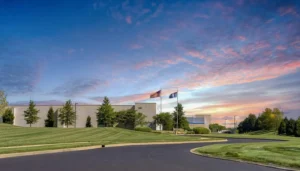
365 Data Centers and Aphorio Carter have partnered to develop 200MW of high-density data centers across the U.S. The collaboration has initiated letters of intent for sites in Aurora, Colorado, and Simpsonville, Kentucky, with both expected to be online within nine to 24 months. The partnership is also targeting additional properties in Connecticut, Virginia, and Ohio to further expand their digital infrastructure footprint.
The project focuses on transforming properties into specialized facilities for modern compute needs. The companies intend to “identify, convert, and develop a portfolio of high-density data center facilities” to meet rising demand. This effort builds on 365 Data Centers’ existing operations, which currently include “more than 20 facilities across the US with around 53MW of capacity.

Gorilla Technology eyes 200MW data center project in Thailand
Gorilla Technology Group has acquired a 40-acre site in Korat to develop a 200MW AI data center campus consisting of six data halls. Construction is set to begin in July 2026, with the initial phase aiming for completion by Q1 2027 to serve Southeast Asia’s growing compute demand. The facility is designed to support approximately 76,000 GPUs at full deployment, focusing specifically on high-density AI infrastructure.
The project highlights the company’s ability to secure the physical assets necessary for advanced computing. CEO Jay Chandan stated, “We’ve secured the land and utilities needed for large-scale compute and cleared hurdles that many others have not.” Regarding the investment model, he added that they are targeting “long-duration institutional capital… that understand the real asset nature of AI compute.”
706-acre data center approved for development outside San Antonio, Texas
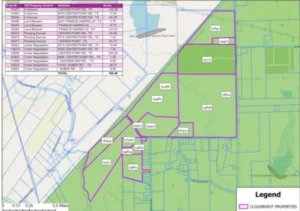
CloudBurst Data Centers has received approval from the Guadalupe Commissioners Court for a massive 706-acre data center project located near San Marcos, Texas. The company plans to invest $14.5 billion to build up to 12 buildings totaling 3 million sq ft, delivering a total capacity of 1.2GW at full completion. The development will be powered by behind-the-meter generation and use closed-loop cooling, with the first 400MW phase expected to finish by 2027.
The project was approved alongside a $500 million tax abatement, despite significant local opposition regarding environmental and health impacts. According to the company, “the 1.2GW campus will be built in three 400MW phases, with the first commencing in 2026 and finishing by 2027.” While a petition against the site has gathered over 1,200 signatures, CloudBurst emphasizes the economic benefits, noting that “the project will provide around $120m in tax revenue annually for the community and the county.”

Anthropic to use all of SpaceX-xAI’s Colossus 1 data center compute
Anthropic has entered a partnership with SpaceX to utilize the entire compute capacity of xAI’s Colossus 1 data center, gaining immediate access to over 300MW and 220,000 Nvidia GPUs. This move is specifically designed to bolster performance for Claude Pro and Claude Max subscribers as the demand for Anthropic’s models continues to surge. Beyond terrestrial expansion, the firm has expressed interest in SpaceX’s ambitious plans to develop multiple gigawatts of orbital AI compute capacity via an orbital megaconstellation.
The deal highlights a shift in industry dynamics, as Anthropic—a direct competitor to xAI—secures nearly half of its total GPU fleet through this agreement. Elon Musk, who previously criticized the firm, commented on the shift via X: “After that, I was ok leasing Colossus 1 to Anthropic, as SpaceXAI had already moved training to Colossus 2.” Anthropic noted that the partnership is a strategic step, stating that the new data center will “directly improve capacity for Claude Pro and Claude Max subscribers.”
PowerHouse looking to build 500-acre data center near Austin, Texas
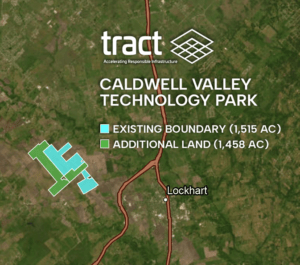
PowerHouse Data Centers is planning to develop a 500-acre facility within the Caldwell Valley Technology Park, located between Austin and San Antonio. The site, backed by land developer Tract, is reportedly capable of supporting up to 4GW of capacity. To streamline the development process, PowerHouse has filed a petition to move the land from the jurisdiction of the city of Uhland to Caldwell County, where planning and zoning regulations are less restrictive.
The move is part of a broader expansion strategy for PowerHouse, which already has a significant presence in Texas. The company recently topped out a 201MW data center in Irving and is developing a 768-acre campus in Ellis County. Regarding the jurisdictional shift, the report notes that in Texas, “counties have less power than cities to regulate and manage data centers, especially when it comes to planning and zoning.” This project adds to a pipeline that reportedly “totals more than 8GW of capacity” across multiple states.
Stack Infrastructure looking to sell Asia operations for more than $30bn – report
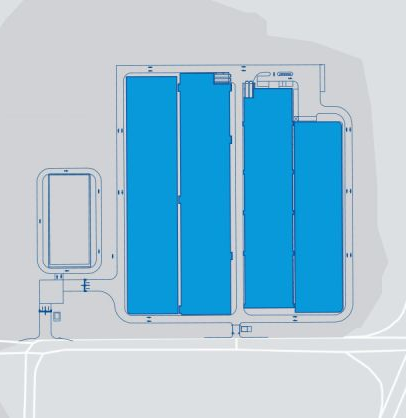
Blue Owl Capital-owned data center firm Stack Infrastructure is reportedly exploring a sale of its Asia-Pacific operations in a deal that could be valued at over $30 billion. Preliminary discussions have taken place with advisers regarding the partial or full sale of assets located in Australia, Japan, and Malaysia. The portfolio under consideration includes significant capacity, notably a 792MW presence in Australia and a 216MW campus in Malaysia, as the company evaluates its strategic position in the region.
The potential divestment comes as investment firms navigate a shifting market landscape and increased redemption requests. According to reports, “the company has had conversations with prospective advisers about the partial or full sale of its Australia, Japan, and Malaysia assets.” This move follows a period of rapid expansion, as the firm “first announced plans to expand into APAC in 2021” and has since built a substantial footprint across several key Tier-1 markets.

AEP sees contracted capacity surge to 63GW, 90% tied to data centers
American Electric Power (AEP) has seen its contracted capacity pipeline surge to 63GW, with 90% of that demand driven by data centers. This 9GW quarterly increase, primarily in Texas and Ohio, has led the utility to raise its capital spending plan to $78 billion to support new infrastructure.
To manage this growth, AEP is implementing “take-or-pay” tariffs to protect existing ratepayers. CEO William J. Fehrman stated, “First, we are protecting our existing customers by ensuring data and other large load customers cover the investments required to support their energy needs.” CFO Trevor Ian Mihalik added that the surge “highlights the strength of our diverse footprint that is highly suited for data centers.”

AWS operated 56.84 million square feet of data center and office space in 2025
Amazon Web Services (AWS) expanded its global footprint to 56.84 million square feet of data center and office space in 2025, marking a 16 percent increase from the previous year. The company’s 10-K filing shows a near-even split between owned and leased properties, with approximately 28.37 million square feet owned and 28.47 million square feet leased.
This physical growth supports a massive financial surge, as AWS recently hit $150 billion in annualized revenue. While the filing doesn’t distinguish between office and data center “white space,” the scale is evident as the company plans to expand its 123 existing Availability Zones into new regions like Saudi Arabia and Chile. Total capital expenditure across Amazon is expected to reach $200 billion this fiscal year to keep pace with these infrastructure demands.

OpenAI claims to have secured 10GW of AI infrastructure capacity ahead of 2029 target
OpenAI has announced that it has already secured 10GW of AI infrastructure capacity, reaching its primary goal years ahead of the original 2029 target. This milestone includes an massive surge of 3GW added in the last 90 days alone, reflecting a shift toward aggressive cloud partnerships and expanded chip contracts to meet soaring demand for its models.
The company is now pivoting from building its own sites to a diverse cloud-first strategy. OpenAI noted that while structures may change, the mission remains: “bringing the benefits of AI to more people requires more compute.” Looking forward, the firm is evaluating further US locations, stating that “demand for AI is growing, and we are moving quickly to secure the infrastructure needed to meet it.”
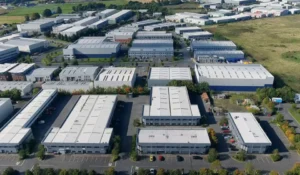
Tract Capital-backed Fleet Data Centers completes second multi-billion debt raise
Stellanor Datacenters has finalized the acquisition of eight data centers from Redcentric plc for approximately £122.9 million, bringing its total UK footprint to eleven facilities. The expansion, completed six months after the initial announcement, adds key locations in London, Reading, Cambridge, and West Yorkshire, providing the platform with 39 MVA of secured grid capacity.
Backed by DWS Group, Stellanor plans to upgrade the new sites to support high-density AI workloads without disrupting existing services. Michael Tobin CBE, Stellanor’s chairman, described the move as a “transformative step in building the UK’s leading urban data centre platform,” noting that the company has scaled from two to eleven sites in just nine months. For Redcentric, the divestment allows a sharper focus on its managed services, with CEO Michelle Senecal De Fonseca stating the deal allows the company to “solely focus on our core managed services business at a pivotal time for our customers.”

Stellanor completes acquisition of eight UK data centres from Redcentric plc
Stellanor Datacenters has finalized the acquisition of eight data centers from Redcentric plc for approximately £122.9 million, bringing its total UK footprint to eleven facilities. The expansion, completed six months after the initial announcement, adds key locations in London, Reading, Cambridge, and West Yorkshire, providing the platform with 39 MVA of secured grid capacity.
Backed by DWS Group, Stellanor plans to upgrade the new sites to support high-density AI workloads without disrupting existing services. Michael Tobin CBE, Stellanor’s chairman, described the move as a “transformative step in building the UK’s leading urban data centre platform,” noting that the company has scaled from two to eleven sites in just nine months. For Redcentric, the divestment allows a sharper focus on its managed services, with CEO Michelle Senecal De Fonseca stating the deal allows the company to “solely focus on our core managed services business at a pivotal time for our customers.”

Equinix reports increasing AI demand, but overall bookings fall from Q4 25 high
Equinix reported $2.444 billion in revenue for Q1 2026, falling slightly below analyst expectations as quarterly bookings dipped from a record high in late 2025. Despite the decline in total volume, the company noted that 60% of its largest deals were AI-related, signaling a strong shift toward high-performance compute and networking infrastructure.
The firm is increasingly becoming a hub for AI development, with 8 of the top 10 model providers and 4 of the top 5 “neoclouds” expanding their footprints across Equinix’s network nodes. CEO Adaire Fox-Martin noted that this specific demand is driving long-term confidence, stating, “The expansion of our relationships with the world’s leading hyperscalers, Neoclouds, AI security vendors, and model providers serves as a magnet for agentic AI workloads.” While a delayed hyperscale lease impacted immediate numbers, the company raised its full-year guidance, with Fox-Martin citing the “underlying strength of our Q1 performance and disciplined execution.”