
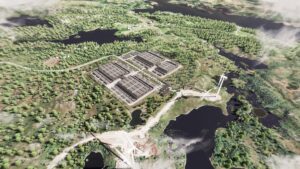
atNorth Plans 350MW Data Center Campus in Norway
Nordic colocation provider atNorth has unveiled plans for a new 350MW hyperscale data center campus in Norway, marking a significant expansion of its high-performance computing footprint in the region. The development underscores Norway’s growing appeal as a preferred destination for large-scale digital infrastructure investment, driven by an abundance of renewable hydroelectric power, a naturally cool climate that reduces cooling costs, and a stable regulatory environment. atNorth, which already operates facilities across Iceland, Sweden, Denmark, and Finland, is positioning the Norwegian campus as a flagship site capable of serving the surging compute demands of AI workloads and cloud-native enterprises.
The 350MW project represents one of the most ambitious capacity announcements in the Nordic market this year, signaling that hyperscale tenants and AI-focused operators are actively seeking greener alternatives to power-constrained markets in Western and Central Europe. Norway’s near-total reliance on renewable energy gives operators a compelling sustainability narrative at a time when data center power consumption is under heightened regulatory and public scrutiny. The campus aligns with atNorth’s broader strategy of combining PUE-efficient infrastructure with green energy credentials to attract customers committed to net-zero targets — a profile increasingly demanded by enterprise and hyperscale clients alike.
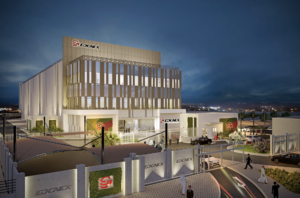
DAMAC Digital Plans 6GW Data Center Expansion Across Four Continents
DAMAC Digital, the technology infrastructure arm of Dubai-based conglomerate DAMAC Group, has announced an ambitious plan to deploy 6 gigawatts of data center capacity across four continents, positioning the company as one of the most aggressive capital deployers in the global digital infrastructure race. The multi-continent strategy targets key growth markets spanning the Middle East, Europe, Asia, and the Americas, reflecting a deliberate effort to capture demand from hyperscale cloud providers and sovereign AI programs that require geographically distributed, high-capacity compute environments. The announcement signals DAMAC’s intent to transition from a regional real estate and lifestyle brand into a globally competitive digital infrastructure platform.
The sheer scale of the 6GW ambition places DAMAC Digital among a select group of developers — alongside the likes of AirTrunk, Equinix, and Digital Realty — capable of underwriting gigawatt-scale commitments across multiple jurisdictions. Execution at this magnitude will require sustained access to capital markets, long-term power purchase agreements, and deep supply chain partnerships for critical infrastructure components including power equipment and cooling systems, all of which remain constrained globally. Nonetheless, DAMAC’s strong balance sheet and sovereign adjacencies in the Gulf region could provide meaningful advantages in securing land, energy rights, and government co-investment — particularly in emerging digital markets where state-backed partnerships are often the key to accelerated deployment.
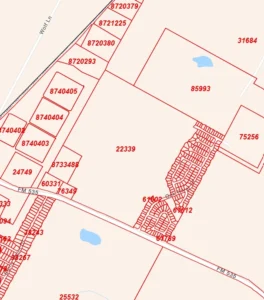
EdgeConnex Files to Build Two 730,000 Sq Ft Data Centers in Bastrop County, Texas
EdgeConneX has filed plans to construct two large-scale data centers in Bastrop County, Texas, each spanning approximately 730,000 square feet, as the company continues its aggressive push into high-demand US markets. The Bastrop County location, situated in the greater Austin metro corridor, has emerged as a strategic alternative to the increasingly congested and power-constrained Northern Virginia and Dallas markets, attracting a growing cohort of developers seeking available land, grid access, and proximity to the state’s technology workforce. Together, the two facilities would represent a combined footprint exceeding 1.4 million square feet, underscoring EdgeConneX’s intent to anchor a substantial hyperscale campus in the region.
Texas has become one of the most contested battlegrounds in the US data center development landscape, with operators drawn by the state’s business-friendly regulatory posture, competitive energy market, and existing fiber interconnection infrastructure. However, developers in the ERCOT grid zone must navigate power reliability concerns and capacity planning complexities that are less pronounced in other regions. EdgeConneX’s Bastrop filings follow a broader trend of campus-scale development along the Austin-to-San Antonio technology corridor, where land costs remain more favorable than established Tier 1 markets. The project adds further evidence that the center of gravity in US data center development continues to shift toward emerging Texas markets as demand from AI and cloud workloads outpaces supply in legacy hubs.
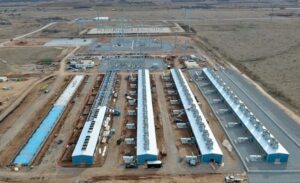
Iren Targets Australia for 800MW Data Center Campus
Iren, the Bitcoin mining and high-performance compute company, has announced plans to develop an 800MW data center campus in Australia, marking its most ambitious infrastructure pivot yet as the firm repositions itself toward the AI and HPC services market. The announcement reflects a broader strategic transformation that has seen a number of energy-intensive Bitcoin miners repurpose their power assets and operational expertise to serve the rapidly expanding AI compute market, where demand for GPU-dense infrastructure is significantly outstripping supply. Australia’s growing digital economy, coupled with government ambitions to develop sovereign AI capabilities, makes it an increasingly attractive destination for large-scale compute investment.
An 800MW campus would rank among the largest proposed digital infrastructure projects in the Asia-Pacific region and, if realized, would establish Iren as a significant player in the Australian market virtually overnight. The project’s success will depend heavily on securing long-term, competitively priced power agreements — a critical factor given the energy intensity of AI compute workloads — as well as navigating Australia’s complex state-level planning and grid connection processes. Nonetheless, the announcement is consistent with a wave of capital flowing into Australian data center development from both domestic and international investors, drawn by the country’s stable political environment, strong rule of law, and a technology sector increasingly hungry for locally hosted compute capacity.
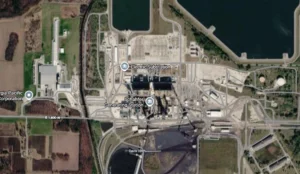
Amazon Plans Nine-Building Data Center Campus in Wheatfield, Indiana
Amazon Web Services has filed plans to develop a nine-building data center campus in Wheatfield, Indiana, in what would represent one of the company’s most expansive campus-scale commitments in the American Midwest. The Wheatfield development is part of AWS’s sustained multi-billion-dollar investment in US data center infrastructure, driven by relentless demand growth from its cloud and AI services portfolio. Indiana has emerged as a competitive destination for hyperscale development, offering available land, access to regional power grids, and a growing ecosystem of economic incentives designed to attract large capital expenditure projects.
The nine-building configuration suggests a phased campus approach that will allow AWS to scale capacity incrementally in response to customer demand, a model the company has refined across dozens of global campuses. For Wheatfield and the broader Jasper County region, an AWS hyperscale commitment of this magnitude carries significant economic weight — bringing construction jobs, long-term operational employment, and substantial tax revenue that rural Indiana communities have actively courted. The development also continues a geographic diversification trend among hyperscalers, who are increasingly distributing capacity beyond the saturated Northern Virginia and Pacific Northwest corridors to mitigate power, land, and regulatory concentration risk.
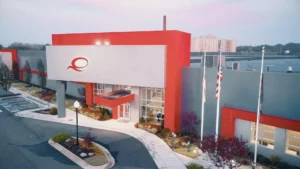
QTS Behind Van Wert, Ohio Mega-Site Acquisition — Announces $10 Billion Data Center Campus
QTS Realty Trust, the Blackstone-backed data center operator, has revealed itself as the developer behind a high-profile mega-site land acquisition in Van Wert, Ohio, announcing plans for a $10 billion data center campus at the location. The Van Wert campus represents one of the largest single-site data center investment announcements in the Midwest and signals QTS’s intent to establish a dominant hyperscale presence in Ohio’s rapidly maturing digital infrastructure market. Ohio has become a focal point for hyperscale development activity, propelled by significant investments from Meta, Google, and Amazon, with the state’s affordable land, access to renewable energy, and favorable business climate underpinning its appeal.
A $10 billion development commitment at this scale reflects the capital intensity of modern AI-era data center infrastructure, where power density requirements and redundancy standards have driven per-megawatt construction costs to historic highs. For QTS, the Van Wert campus reinforces its strategy of developing large, power-rich campuses in emerging markets before constraint and competition intensify — a playbook consistent with its Blackstone ownership, which prioritizes long-term asset appreciation over near-term yield. The announcement is also notable for its transparency around land acquisition strategy, as mega-site transactions of this nature are frequently structured through anonymous LLCs to avoid speculative land price inflation prior to public disclosure.

Submer Launches Rubix Data Centers, Claims Platform Has 8GW Powered Land Portfolio
Immersion cooling specialist Submer has launched a new development and colocation platform called Rubix Data Centers, claiming the venture is backed by a portfolio of powered land sites representing a combined 8GW of potential capacity. The launch signals Submer’s evolution from a cooling technology vendor into an integrated data center platform provider, a strategic escalation that positions the company to capture more of the value chain in the AI infrastructure build-out. Rubix is designed to offer customers AI-optimized facilities leveraging Submer’s proprietary immersion cooling technology, which enables significantly higher power densities than traditional air-cooled environments — a critical advantage as GPU cluster deployments continue to demand more watts per rack.
The claimed 8GW powered land portfolio, if substantiated, would place Rubix among the largest latent development platforms in the industry, rivaling the site portfolios of established hyperscale developers. Immersion cooling’s ability to support rack densities well above conventional data center design parameters makes it particularly well-suited to the next generation of AI training and inference infrastructure. However, the platform’s success will ultimately hinge on Submer’s ability to convert land and power rights into delivered capacity at the pace required by a market accustomed to rapid scaling timelines. Rubix represents a bold bet that technology differentiation, specifically superior thermal management, can become a decisive competitive advantage in an increasingly crowded development landscape.

AI Data Center Demand ‘Larger Than We’re Prepared For’ Despite Existential Investment — Report
A new industry report has concluded that AI-driven data center demand is materially larger than the sector is currently equipped to handle, even as capital investment in new capacity reaches levels that industry observers describe as historically unprecedented. The report highlights a fundamental mismatch between the pace at which AI workloads are scaling — driven by hyperscaler model training, enterprise AI adoption, and inference infrastructure requirements — and the industry’s ability to deliver commissioned capacity within the timeframes demanded. Constraints spanning power grid interconnection queues, equipment supply chains, skilled labor availability, and planning permissions are collectively acting as a ceiling on how rapidly new supply can reach the market.
The framing of investment as ‘existential’ reflects a growing consensus that the AI infrastructure race has moved beyond a cyclical demand surge into a structural transformation of the digital economy, one where capacity shortfalls carry real economic and geopolitical consequences. Governments, utilities, and private developers are each grappling with the scale of the challenge: grid upgrades that typically take years are being demanded in months, while manufacturers of power transformers, switchgear, and cooling systems are running at full capacity with extended lead times. The report adds analytical weight to what practitioners across the industry have been signaling anecdotally — that demand is not only robust but is increasingly difficult to model with confidence, making long-range planning and capital allocation a genuinely complex undertaking.

Anthropic Raises $6.5BN, Overtakes OpenAI to $96.5BN Valuation
Anthropic has closed a $6.5 billion funding round that values the AI safety-focused company at approximately $96.5 billion, surpassing OpenAI’s most recently reported private valuation and marking a milestone in the intensifying competition among frontier AI labs for capital and talent. The round reflects sustained investor conviction in Anthropic’s Claude model family and its enterprise-focused go-to-market strategy, which has gained significant traction among large organizations prioritizing reliability, safety, and regulatory compliance in their AI deployments. Major cloud provider Amazon, which has committed up to $4 billion to Anthropic in a separate strategic partnership, remains closely aligned with the company’s infrastructure and commercial roadmap.
The valuation leap underscores how quickly the competitive landscape among frontier AI developers has shifted, with companies that were considered well-capitalized just eighteen months ago now in a persistent cycle of capital raises to fund the compute infrastructure required for next-generation model training. For Anthropic, the fresh capital provides runway to scale its own training clusters, expand Claude’s inference infrastructure, and deepen enterprise sales efforts across regulated industries including finance, healthcare, and government. The round also reinforces the broader pattern of AI lab valuations decoupling from conventional software multiples — a dynamic driven by the capital intensity of frontier model development and the strategic premium investors are placing on ownership stakes in companies that may define the next decade of AI capability.
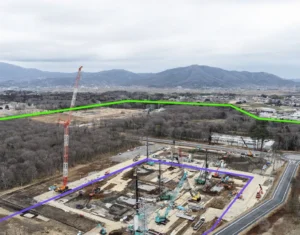
Goodman Eyes New Data Center Development Outside Tokyo, Japan
Global logistics and industrial property giant Goodman Group is evaluating opportunities to develop a new data center outside the Tokyo metropolitan area, according to reports, as the company looks to deepen its presence in one of Asia-Pacific’s most strategic digital infrastructure markets. Japan has experienced a sharp acceleration in data center demand, driven by hyperscaler expansion, the Japanese government’s push to develop domestic AI capabilities, and a broader corporate technology upgrade cycle among the country’s large enterprise base. Greater Tokyo remains the dominant hub, but land scarcity and power constraints within the urban core have prompted developers to explore satellite locations capable of delivering large-scale capacity with grid access.
Goodman’s interest in the Japanese data center market is consistent with its global strategy of leveraging its industrial land bank and development expertise to capture value in the digital infrastructure sector — an approach the company has pursued with increasing conviction across Australia, Europe, and North America. A development footprint outside central Tokyo would allow Goodman to offer hyperscale-compatible campus environments that are difficult to assemble within city limits, where land parcels are fragmented and power procurement is constrained. Japan’s regulatory environment, while complex, has become more navigable for foreign and institutional developers in recent years, and the country’s data residency requirements create sustained structural demand for locally hosted compute — making it an attractive long-term market for developers with Goodman’s scale and patient capital profile.
SoftBank Plans Up to 5GW Data Center Buildout in France, Investment of Up to €7.5BN
SoftBank Group has announced plans to invest up to €7.5 billion in a French data center buildout of up to 5GW, representing the Japanese conglomerate’s most significant European digital infrastructure commitment to date. The announcement was made in the context of France’s active efforts to attract foreign direct investment in AI and digital infrastructure, with the French government having positioned the country as a leading destination for technology investment through its ‘Choose France’ initiative. SoftBank’s commitment adds to a growing list of hyperscale and sovereign AI investments earmarked for France, which has benefited from strong political leadership, access to low-carbon nuclear energy, and a skilled technology workforce.
A 5GW buildout would be transformational for the French data center market, which — while home to established colocation providers and significant hyperscale campuses — has not previously hosted a single announced development program at this power scale. SoftBank’s involvement brings both capital credibility and a strategic AI dimension, given the firm’s portfolio positions in companies including Arm Holdings and its broader orientation toward artificial intelligence as a core investment thesis. The phased nature of a commitment this size means execution will depend on securing grid connections, planning approvals, and long-term power agreements across multiple French regions — each with its own regulatory dynamics — but the announcement nevertheless represents a landmark moment for France’s ambitions as a European AI infrastructure hub.
EdgeD Files to Develop Data Center in Fort Worth, Texas
EdgeD, a data center developer with a focus on distributed and edge-oriented infrastructure, has filed plans to develop a new facility in Fort Worth, Texas, adding to the surge of data center development activity across the Dallas-Fort Worth metroplex. Fort Worth has increasingly attracted developer attention as a complement to the more established Plano, Allen, and Irving data center clusters within the broader DFW market, offering competitive land costs, available power infrastructure, and strong fiber connectivity along major routes. The filing reflects continued demand from cloud providers, content delivery networks, and enterprise customers seeking colocation options within one of the fastest-growing technology markets in the southern United States.
The DFW market has established itself as the second-largest data center market in the United States by capacity, trailing only Northern Virginia, and Fort Worth’s emergence as a development node within that market signals its growing role in accommodating overflow demand from more constrained submarkets. EdgeD’s project, while smaller in scale than the hyperscale campus announcements dominating recent headlines, represents the kind of mid-market colocation supply that serves a broad base of enterprise and wholesale tenants for whom operational proximity to the Texas technology ecosystem carries real commercial value. As demand from AI inference workloads — which benefit from geographic distribution to reduce latency — continues to grow, edge-adjacent markets like Fort Worth are likely to see sustained developer interest.