
Blackstone is leading a $1.2 billion funding package for India-based AI infrastructure platform Neysa, committing up to $600 million in equity alongside co-investors, with plans for an additional $600 million in debt. Founded in 2023, Neysa builds in-country GPU infrastructure for training, fine-tuning, and deploying AI models, and plans to deploy more than 20,000 GPUs across India to support enterprise and government workloads as it scales its sovereign compute platform.
The investment reflects Blackstone’s broader strategy of backing core AI “picks and shovels,” building on its exposure to digital infrastructure assets such as QTS, AirTrunk, CoreWeave, and Firmus. Neysa CEO Sharad Sanghi said the funding will help deliver production-grade AI infrastructure aligned with India’s national AI ambitions, enabling secure, scalable deployments for enterprises, hyperscalers, and public institutions as AI adoption accelerates across the country.
FULL ARTICLE
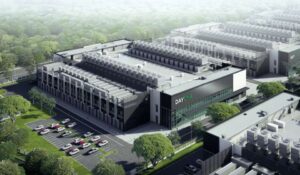
DayOne Data Centers is reportedly preparing for a US IPO that could raise around $5 billion, according to Bloomberg. The Singapore-based data center operator has appointed JPMorgan and Morgan Stanley to lead the process, with Bank of America and Citi also involved. Backed by GDS Holdings, DayOne has previously targeted a valuation of up to $20 billion, with a potential listing as early as 2026, though key terms such as timing and deal size are still under discussion.
The company has been expanding aggressively, having raised more than $2 billion in a Series C round last month to support international growth. DayOne operates data centers across Asia and Europe, and its reported IPO plans come amid strong investor interest in digital infrastructure, with several data center and AI infrastructure firms globally also exploring public market listings over the next year.
FULL ARTICLE

Microsoft says it is on track to invest $50 billion by 2030 to accelerate AI adoption across the Global South, with more than $8 billion already invested in data center infrastructure in the last fiscal year. The spending has supported new facilities and capacity in regions including India, Mexico, Africa, South America, Southeast Asia, and the Middle East, targeting the core constraints that limit AI adoption in emerging markets such as power, connectivity, and compute availability.
Beyond infrastructure, Microsoft is expanding connectivity and skills programs to broaden access to AI. The company aims to bring internet access to 250 million people in underserved regions, including 100 million in Africa, and has already reached 117 million through partnerships. It also invested more than $2 billion last year in cloud, AI, and digital access initiatives for schools and nonprofits, and plans to help 20 million people earn AI credentials globally by 2028, with a separate goal of training 20 million people in India by 2030.
FULL ARTICLE

Fleet Data Centers has priced $3.8 billion in senior secured notes to finance the development of a fully leased hyperscale data center campus with 230MW of capacity and 200MW of IT load. Issued through a Fleet subsidiary, the 5.875 percent notes mature in March 2031 and were placed privately with institutional investors, with proceeds supporting construction of the campus and its associated power infrastructure in Storey County, Nevada.
The project is backed by a 197-month triple-net lease with an unnamed AA-rated hyperscale customer valued at more than $3 trillion, pointing to a top-tier cloud or technology provider. Fleet, which focuses on build-to-suit, campus-scale facilities, is backed by Tract Capital, a digital infrastructure investor specializing in powered land and large-scale data center developments.
FULL ARTICLE
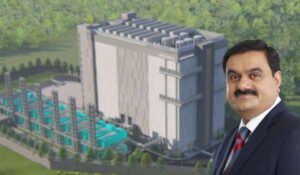
Adani Group has committed $100 billion by 2035 to build sovereign, renewable-energy-powered, hyperscale AI-ready data centres across India, combining AI compute with large-scale energy infrastructure. The group aims to develop an integrated energy-and-compute ecosystem, targeting up to 5GW of data centre capacity while owning the data centre infrastructure, chips, and power supply. Adani estimates the investment will catalyse a further $150 billion across server manufacturing, electrical infrastructure, sovereign cloud platforms, and related industries, creating a $250 billion AI infrastructure ecosystem over the next decade.
The strategy is anchored by partnerships with Google for a gigawatt-scale AI campus in Visakhapatnam, additional sites in Noida, and Microsoft-linked developments in Hyderabad and Pune, with more campuses under discussion. Facilities will be designed for high-density AI workloads using liquid cooling and advanced power systems, and will support Indian large language models and national data initiatives to ensure data sovereignty. Powering the platform is Adani Green Energy’s 30GW Khavda renewable project, alongside a further $55 billion investment to expand renewable generation and large-scale battery energy storage to strengthen grid resilience.
FULL ARTICLE

Rowan Digital Infrastructure has raised approximately $550 million in construction financing to fund the first phase of its 300MW Cinco data centre campus in Medina County, Texas, which broke ground in September 2025. The project represents a minimum $900 million direct investment and is being developed under Rowan’s new Green Loan Framework, which recently received a “Strong” rating from Sustainalytics, highlighting its alignment with sustainability-linked financing standards.
The financing was led by TD and Mizuho, with participation from multiple global banks, and brings Rowan’s total debt funding raised over the past 18 months to more than $4 billion. In addition to Cinco, Rowan is advancing large-scale developments in Maryland, Temple (Texas), and Percheron (Oregon), reinforcing its focus on delivering campus-scale capacity for next-generation and AI-driven compute across key US markets.
FULL ARTICLE

Mistral AI has committed €1.2 billion ($1.4bn) to develop AI-focused data centre infrastructure in Sweden, marking its first major infrastructure investment outside France. The Paris-based AI company will partner with EcoDataCenter to build large-scale facilities at the operator’s Borlänge site, with operations expected to begin in 2027, supporting the deployment of Mistral’s AI models at scale and strengthening Europe’s computing capacity.
The move reflects a broader push to boost European technological autonomy, leveraging the Nordics’ access to renewable energy, stable power supply and favourable cooling conditions. The investment follows Mistral’s rapid growth and recent fundraising, positioning the company as a leading European alternative in a market still dominated by US-based AI firms, while adding momentum to Sweden’s role as a hub for sustainable, high-performance digital infrastructure.
FULL ARTICLE
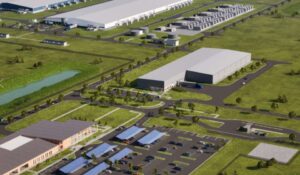
Meta has begun construction of a new 1GW data centre campus in Lebanon, Indiana, a project expected to exceed $10 billion and become the company’s second site in the state. At peak construction, the development is set to support more than 4,000 construction jobs, with around 300 permanent roles once operational, and will support both AI workloads and Meta’s core digital services.
Beyond the build, Meta has committed significant community investment, including more than $120 million in local infrastructure upgrades, long-term funding for energy and water assistance, and workforce development programmes through local schools. The campus will be powered by matched clean energy, target LEED Gold certification, and use a closed-loop liquid cooling system, alongside water restoration initiatives designed to return the equivalent of its water use back to local watersheds.
FULL ARTICLE

Kevin O’Leary is planning a second gigawatt-scale “Wonder Valley” data centre campus, this time in Utah, with up to 7.5GW of power capacity aimed at hyperscale customers. The site is proposed for Box Elder County, near Salt Lake City, and would be developed by O’Leary Digital alongside partners, with permitting and regulatory coordination overseen by West GenCo. The Utah project follows a similar Wonder Valley development announced in Alberta, Canada, with the two campuses together potentially offering a combined 15GW of capacity.
According to O’Leary, the developments span roughly 26,000 acres across two jurisdictions and are designed to support large-scale compute with integrated on-site energy and utility infrastructure. The Utah site is said to benefit from access to major natural gas infrastructure, while the Alberta project is expected to be supported by a dedicated gas-fired power plant. O’Leary Digital says the campuses will use repeatable, flexible designs to adapt to evolving AI and compute requirements as demand continues to accelerate.
FULL ARTICLE

Meta has signed a multi-year, multi-generation partnership with Nvidia covering large-scale deployments of CPUs, GPUs, and networking for its AI infrastructure. Under the agreement, Meta will deploy Nvidia Grace CPUs alongside millions of Blackwell and Rubin GPUs, as well as Nvidia’s Spectrum-X Ethernet networking platform. Nvidia said this marks the first large-scale deployment using Grace CPUs on their own, with Meta also planning a major rollout of Nvidia’s forthcoming Vera CPUs starting in 2027.
The hardware will support Meta’s hyperscale data centres built for AI training and inference, aligning with the company’s rapidly expanding AI roadmap. Meta has forecast 2026 capex of $115–135 billion, driven largely by infrastructure spending, and has previously said it plans to invest up to $600 billion in US data centres by 2028. Both companies framed the deal as a deep co-design effort across compute and networking, aimed at powering Meta’s next generation of AI systems at global scale.
FULL ARTICLE
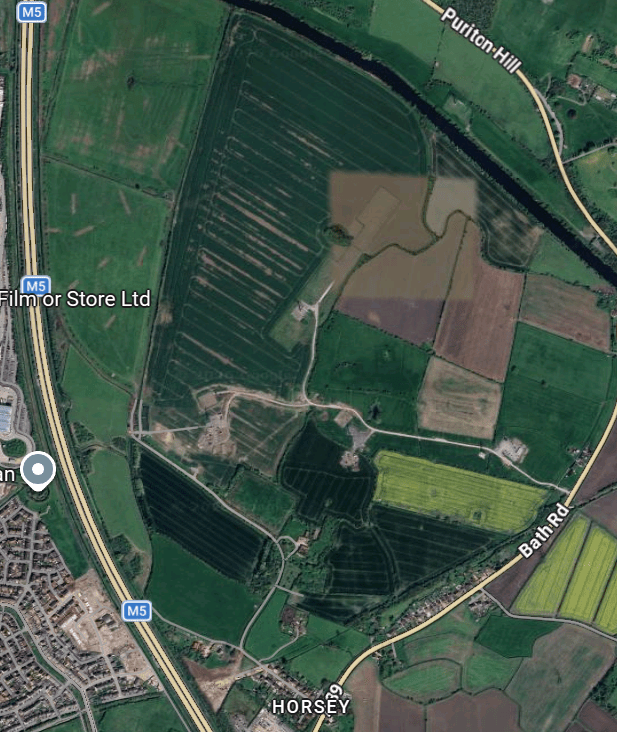
A large-scale data center campus of up to 500MW is being proposed near Bridgwater in Somerset, southwest England. Developer Express Distribution Park has submitted an initial request to Somerset Council to scope an Environmental Impact Assessment for the Somerset Data Centre at land in Horsey, a move that allows the project to progress toward a full planning application. The proposed campus would span around 250,000 square metres across multiple buildings, potentially making it one of the largest data center developments in the UK.
The 130-hectare site sits north of Bridgwater, adjacent to the M5 motorway and next to an existing solar farm, suggesting grid access and renewable proximity as key factors. While no end user has been disclosed and it remains unclear whether the scheme is speculative, the proposal would be a major expansion of digital infrastructure in a county that currently hosts very few data centres.
FULL ARTICLE
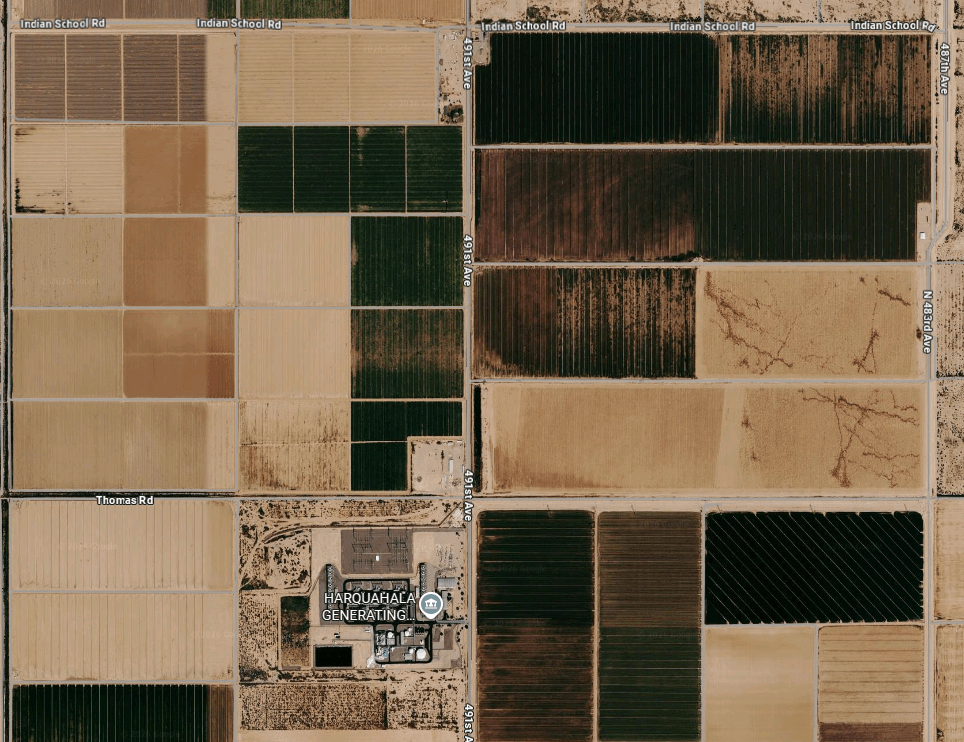
A large data center campus totaling up to 2.25 million square feet has been proposed outside Phoenix after the Maricopa County Board of Supervisors approved the rezoning of a 638-acre site near Tonopah. The land was rezoned to an industrial classification that allows data centers, substations, battery storage, and on-site power generation. At full build-out, the project could include up to nine data center buildings of roughly 250,000 sq ft each, though no developer timeline or tenant has yet been disclosed.
The site is owned by Grandilla Arizona Inc. and Foot Creek Corporation and sits close to the Harquahala Generating Facility, a 1GW combined-cycle natural gas plant operated by Capital Power and BlackRock. Proximity to large-scale generation could make the location attractive for energy-intensive workloads such as AI and cloud computing, as developers increasingly prioritize sites with nearby power availability.
FULL ARTICLE
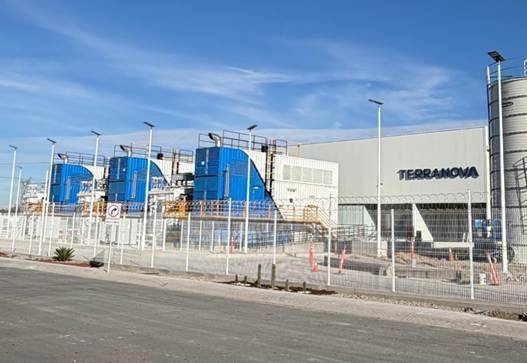
Terranova, the hyperscale data center platform backed by Actis, has officially launched operations in Mexico with its first data center campus in the Querétaro region. The facility is designed to scale up to 20MW and targets growing demand for AI workloads, cloud services, and mission-critical applications. According to CEO José Eduardo Quintella, the site marks Terranova’s transition from concept to fully operational platform, with the project moving from design to completion in just 12 months.
The Mexican launch is part of a broader $1.5 billion investment plan to develop large-scale campuses across Mexico, Brazil, and Chile over the next three years, with the ambition to reach up to 1GW of future capacity in the region. In addition to Querétaro, Terranova is building another data center in San Miguel de Allende, Guanajuato, due to come online in early 2026. Actis says Terranova will leverage its global experience in digital and energy infrastructure to deliver scalable and energy-efficient facilities for hyperscalers and regional clients across Latin America.
FULL ARTICLE