

Microsoft to launch new cloud region in Atlanta, Georgia, in 2027
Microsoft is set to launch a new cloud region in Atlanta, Georgia, in 2027, following an announcement by Omar Khan, VP of Azure infrastructure marketing, who confirmed the creation of the East US 3 region alongside the expansion of five existing US data center regions. While Microsoft already operates the “Fairwater” site, a large-scale AI data center launched in November 2025, the company is building additional facilities so Atlanta can function as a full cloud region supporting “all our customer workloads,” with projects underway in Fulton County, East Point, Douglasville, and a 347-acre data center campus in Rome, Georgia. In parallel, Microsoft will expand North Central US (Illinois), West Central US (Wyoming), US Gov Arizona, East US 2 (Virginia), and South Central US (Texas) between 2026 and early 2027, as the company continues to grow its global footprint of more than 70 regions and over 400 data centers worldwide.
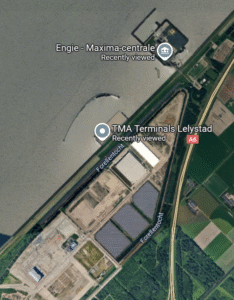
Equinix targets 150MW campus in Lelystad, Netherlands
Colocation firm Equinix is reportedly planning a large data center campus outside Amsterdam, with Omroep Flevoland reporting the company is targeting a 150MW site at the Flevokust Haven industrial estate in Lelystad. The €1.5 billion ($1.7bn) project is expected to include three two-story buildings, with Equinix currently applying for permits and aiming to begin construction next year, completing the development in phases through 2028 or 2029. According to Michiel Eielts, director of Equinix Benelux, the campus will be directly powered by the Engie-owned Maxima power plant, an 861.1MW gas-fired facility launched around 2010, with the adjacent site having been designated as a data center area since 2016, as Equinix continues to expand its Dutch footprint beyond its existing facilities in Amsterdam, Enschede, and Zwolle.
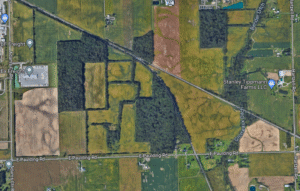
Google’s $2bn data center now operational in Fort Wayne, Indiana
The developers of Google’s $2 billion data center in Fort Wayne, Indiana, have confirmed that the facility is now operational, with Wane reporting it will support services such as Google Maps, Gemini AI, and Google’s cloud customers. The project, previously known as Project Zodiac, was first revealed in April 2024 and is expected to be a large campus potentially spanning more than 700 acres, developed in partnership with Indiana Michigan Power Company (I&M), with up to 200 jobs anticipated. While the exact number of completed buildings has not been disclosed, Google has faced community concerns around air pollution and energy usage and is holding a “community forum” on December 11 to address these issues, alongside commitments that include a custom demand response program with I&M, funding local water infrastructure projects, and restoring part of the wetlands at the site.

Georgia Power proposes $16bn plan to add 10GW of new generation capacity to meet data center growth
US utility Georgia Power and the Georgia Public Service Commission have submitted a $16bn proposal to add up to 10GW of new generation capacity over the next five years, aiming to meet surging electricity demand driven largely by data center growth, with around 90 percent of the additional power intended for the sector. The plan would authorize Georgia Power to develop new power plants and expand its generation and storage portfolio, including natural gas generation, battery storage, and solar, with the majority of the capacity coming from natural gas, marking what could become one of the largest generation expansions in the state’s history if approved by the Public Service Commission, which is scheduled to vote on December 19.
The proposal has drawn opposition from environmental and local groups concerned about increased emissions, a slower transition to low-carbon energy, and potential rate increases, with projections suggesting monthly bills could rise by as much as $20, despite Georgia Power stating the reforms would generate savings of $8.50 for the typical residential customer. “It doesn’t mean that in 2029 residential customers will see their bills go down. What it means is that when they do all the various accounting, they promise that if we have a rate case – which we may not – that this class of customers (data centers) will put downward pressure on the costs otherwise attributed to residential customers, which is just a really long, complicated way of saying, ‘we don’t know what’s going to happen,” said Jennifer Whitfield, senior attorney at the Southern Environmental Law Center, while Georgia Power CEO Kimberly Greene said, “Large energy users are paying more so families and small businesses can pay less.”

Microsoft to launch data center region in Denmark in 2026
Microsoft is planning to launch a cloud region in Denmark in 2026, with the new Denmark East region set to be hosted across multiple data centers nationwide, including new projects in the municipalities of Esbjerg and Varde, according to the Danish Data Center Industry. While the exact investment value has not been disclosed, DDI CEO Henrik Hansen described it as a “multi-billion dollar investment,” with Microsoft Denmark and Iceland CEO Mette Kaagaard stating, “This investment is more than a data center. It reflects the strong momentum in Denmark’s digital and energy ecosystem. By expanding here, we are building essential cloud infrastructure while strengthening local partnerships and supporting the long-term growth of the Varde and Esbjerg region,” a view echoed by Minister of Economic Affairs Stephanie Lose, who said, “I am very pleased when large companies as Microsoft choose to make significant investments in Denmark and help create new jobs,” adding that the project could support growth and employment in West Denmark, with all energy consumption matched by 100 percent carbon-free energy through long-term PPAs.

Data center investment likely to hit $1.6 trillion by 2030 – report
Data center investment could reach nearly $1.6 trillion by 2030, according to forecasts from research firm Omdia, as demand for AI compute capacity continues to grow despite slower AI adoption and concerns about a potential bubble. In its December Cloud and Data Center Market Snapshot, Omdia said its “likeliest” or “consensus” scenario shows data center capex hitting $1.6 trillion by 2030, noting that it “considers actual order pipeline and demand which are both strong,” while being “balanced against numerous constraints (power availability, manufacturing capacity, supply chain hiccups).”
The firm also outlined a lower-probability “bubble scenario,” which it assigns a five percent likelihood, reflecting “a failure to realize productivity gains through AI use quickly enough, and after five years of accelerated investment, investors get spooked.” These concerns have been echoed by IBM CEO Arvind Krishna, who warned there was “no way” companies would see returns on massive AI data center investments, arguing that around 100GW of global commitments could require $8 trillion in capex and “$800 billion of profit just to pay for the interest.”
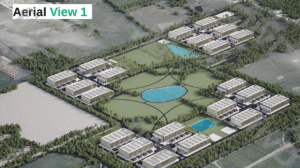
$10bn data center project recieves approval in Lacy Lakeview, Texas
A proposed $10bn data center campus in Lacy Lakeview near Waco, Texas, has received initial approval from city council members, with InfraKey Capital planning to develop up to six data centers totaling 1GW of capacity on 520 acres of farmland west of Elm Mott, a project expected to take four to five years to complete. While the council approved a non-binding agreement on December 9 to continue negotiations, the project has faced local backlash, with resident Lauren Hill saying, “AI data investors are not interested in this town because they want to live here or they want their kids to go to these schools. They’re interested in using this town as a resource, and they want us to say yes to this deal very quickly,” while Mayor Charles Wilson said the investment could help fund improvements to the city’s infrastructure, as Texas continues to attract major data center developments.

Amazon commits $35bn investment in India by 2030
Amazon has announced plans to invest $35bn in its businesses in India by 2030, building on the $40bn it has already invested, with a focus on “AI-driven digitization, export growth, and job creation,” though the company has not detailed how much will be allocated to AI infrastructure or data centers. “We are humbled to have been a part of India’s digital transformation journey over the past 15 years, with Amazon’s growth in India perfectly aligned with the vision of an Atmanirbhar and Viksit Bharat,” said Amit Agarwal, Senior VP Emerging Markets, Amazon, adding, “We have invested at scale in growing the physical and digital infrastructure for small businesses in India, creating millions of jobs, and taking Made-in-India global,” as the announcement follows closely after Microsoft’s $17.5bn AI investment commitment and amid growing large-scale data center investments in the country.
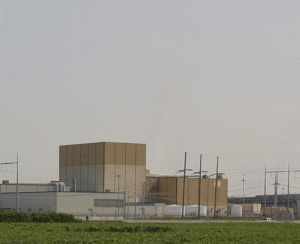
NextEra Energy partners with Google to develop at least three gigawatt-scale data center campuses
NextEra Energy has partnered with Google Cloud to develop at least three gigawatt-scale data center campuses, along with the generation and capacity needed to power them, with the companies already working on the first three sites and exploring additional locations. “Our partnership with Google exemplifies this very singular moment when energy and technology are becoming inextricably intertwined,” said NextEra Energy chairman and CEO John Ketchum, noting the goal is to build data center and energy infrastructure at scale by combining NextEra’s energy expertise with Google’s technology capabilities.
Under the partnership, Google Cloud will provide its generative and agentic AI services to NextEra Energy, integrating them with asset data to predict equipment issues, prevent outages, and improve grid planning. “Working with NextEra Energy to power our infrastructure growth further strengthens our long-standing collaboration and will help us meet increasing demand from our customers as they deploy AI technologies at scale,” said Google Cloud CEO Thomas Kurian, with the first commercial product expected to launch on the Google Cloud Marketplace by mid-2026.
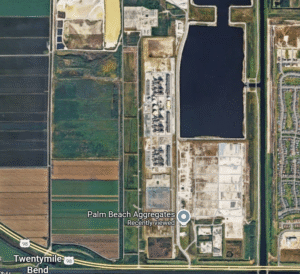
3.7 million sq ft data center campus gets initial OK from officials in Florida
A large data center campus known as Project Tango is being planned in Loxahatchee, west of West Palm Beach, after Palm Beach County’s zoning commission recommended approval of plans filed by investment firm PBA Holdings. The project could span up to 3.7 million sq ft at full build-out across 202 acres and is located near existing industrial infrastructure, including Florida Power & Light’s 1.25GW West County Energy Center, though it has faced local opposition, with a Change.org petition raising concerns about its proximity to residential areas and warning that “The sheer scale of this project… poses a substantial threat to the health, safety, and well-being of residents.”

Approval given to first phase of £10bn data center in Northumberland, England
The first phase of a £10bn ($13bn) data center project in Northumberland, England, has received approval, with Northumberland County Council granting permission on December 2 for the construction of two of up to ten planned buildings at QTS’s 720MW campus in Cambois. The 540,000 sqm campus is being developed at the former Blyth Power Station site, where enabling works began in October, and will also include two “freedom parks,” while benefiting from AI Growth Zone status that provides faster access to power and planning, as Blackstone-owned QTS continues to expand its European footprint beyond existing operations in the Netherlands and Spain.
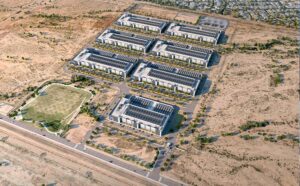
NTT signs 130MW of capacity leases with unnamed hyperscalers
NTT has signed 130MW of data center capacity leases in the US with unnamed “leading hyperscale cloud providers,” covering sites across its campuses in Chicago, Dallas, Phoenix, and Virginia, though details on customers and capacity allocation were not disclosed. “These agreements reflect the trust our clients place in NTT Global Data Centers to deliver the scale, flexibility, and reliability required to power their digital transformation,” said Doug Adams, CEO and president of NTT Global Data Centers, adding that as AI adoption accelerates, clients are seeking infrastructure capable of supporting “compute-intensive AI workloads with speed, security and sustainability.”
The deals come as NTT continues to expand its global data center footprint, operating more than 150 facilities across 20 countries and having added over 370MW of IT capacity in the past year, with a planned $10bn investment through 2027. The company has also acquired land in multiple markets for up to 1GW of future development and recently launched the Bengaluru 4 campus in India, a 100MW site designed to support liquid cooling, reinforcing NTT’s focus on scaling infrastructure to meet growing hyperscale and AI-driven demand.

OpenAI and NextDC unveil AUD 7bn plan for sovereign AI campus in Sydney
OpenAI and NextDC have signed a Memorandum of Understanding to develop a sovereign AI infrastructure campus in Western Sydney, outlining an AUD 7bn plan at NextDC’s planned 650MW S7 campus in Eastern Creek. The project, part of the “OpenAI for Australia” programme, will include a hyperscale AI facility and GPU supercluster, with OpenAI acting as an initial offtaker, and is being designed to align with Australia’s Security of Critical Infrastructure framework, with the first phase expected in the second half of 2027, subject to approvals.
OpenAI said the campus will provide Australia with sovereign compute capacity for sensitive workloads as it launches its first Australian office, while the federal government welcomed the investment under its National AI Plan. Treasurer Jim Chalmers called the deal “a terrific outcome for our economy and our thriving tech sector,” highlighting its potential to support jobs, sustainable infrastructure, and long-term growth in Australia’s AI ecosystem.
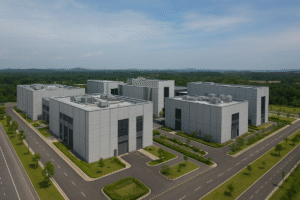
Empyrion Digital launches 200MW data center in Johor
Empyrion Digital has announced it has received regulatory approvals for a new 200+MW hyperscale data center campus in Johor, Malaysia, known as MY1, which will be developed on a 34.9-acre site and comprise five 40MW buildings delivered in phases, with the first phase targeted to be ready for service in Q4 2026. The Singapore-headquartered company has secured 145MW of initial power from Tenaga Nasional Berhad, will incorporate liquid and air-cooled technologies targeting PUEs below 1.3 and 1.4 respectively, and will access green energy through long-term PPAs, while CEO Mark Fong said, “Malaysia has emerged as a key destination for hyperscale data centres, driven by strong digital transformation, favourable infrastructure, and government support,” adding that MY1 reflects Empyrion’s ambition to deliver “scalable, green-by-design, and AI-ready infrastructure” and strengthen cross-border digital connectivity between Johor and Singapore.