

Anthropic Signs More Than a Dozen Letters of Intent for Data Center Leases
Anthropic has reportedly signed more than a dozen letters of intent (LOIs) for data center leases as the AI company aggressively scales its compute infrastructure to meet surging demand for its Claude model family. The LOIs span multiple regions and represent a significant step-up in Anthropic’s direct infrastructure procurement strategy, signalling a shift from its earlier reliance solely on cloud provider capacity toward securing dedicated, long-term colocation and wholesale arrangements.
The move reflects a broader trend among frontier AI labs — including OpenAI and xAI — to lock in large-scale capacity well ahead of deployment timelines, often committing to multi-hundred-megawatt footprints across several campuses. For data center operators and developers, Anthropic’s leasing activity represents a material demand signal, reinforcing investor confidence in hyperscale AI absorption rates through the latter half of the decade.
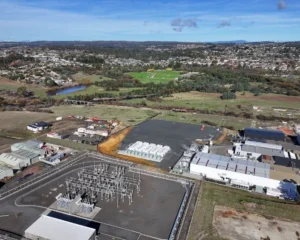
Firmus Targets 288MW Data Campus in Tasmania
Norwegian data center developer Firmus is advancing plans for a 288MW hyperscale campus in Tasmania, Australia, leveraging the island state’s abundant renewable energy resources — primarily hydropower — to attract sustainability-focused hyperscale tenants. Tasmania’s green energy credentials and temperate climate make it an increasingly attractive destination for large-scale compute infrastructure as cloud providers and AI companies intensify their net-zero commitments.
The project would mark a significant milestone for Australia’s broader digital infrastructure ambitions, extending hyperscale capacity well beyond the established Sydney and Melbourne corridors. Firmus’s expansion into the Asia-Pacific market follows its track record of developing low-carbon campuses in the Nordics, and the Tasmania announcement underscores growing developer confidence in sovereign, renewable-powered compute as a differentiating proposition for tier-one tenants.

Google Appoints New Head of Data Center Energy Infrastructure in EMEA
Google has appointed a new regional leader to head data center energy infrastructure across Europe, the Middle East, and Africa, reflecting the company’s intensifying focus on power procurement and grid integration as it expands its EMEA footprint. The appointment comes at a critical juncture: Google has committed to significant capital investment across several European markets, including the UK, Germany, and the Netherlands, where power constraints and permitting timelines remain key execution risks.
The hire signals that energy strategy — spanning power purchase agreements, grid connection negotiations, and on-site generation — has become a C-suite-adjacent function within hyperscale organisations. As AI-driven workloads push facility power densities higher, the ability to secure reliable, low-carbon energy at scale is emerging as one of the most consequential operational capabilities in the data center sector.
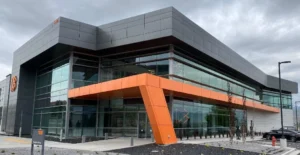
DataBank Secures $1.45bn for Data Center Build-Out
Edge and enterprise colocation provider DataBank has secured $1.45 billion in financing to accelerate its national data center expansion programme. The capital raise — one of the larger funding rounds in the US colocation sector this cycle — will support new facility construction and upgrades across DataBank’s existing multi-market portfolio, which spans primary and secondary markets across the United States.
The financing underscores sustained investor appetite for scaled colocation platforms with diversified geographic exposure and enterprise customer bases. DataBank’s focus on markets beyond the Tier 1 hyperscale hubs positions it to capture demand from regulated industries, government agencies, and enterprises requiring low-latency edge infrastructure — a segment that has remained resilient even as hyperscale absorption has dominated headlines.
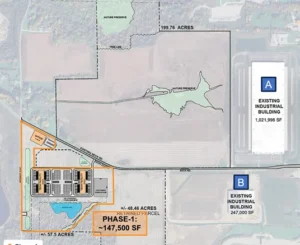
Bitdeer Looks to Develop 750MW Data Center Campus in Ohio
Cryptocurrency mining and high-performance compute company Bitdeer is advancing plans to develop a 750MW data center campus in Ohio, marking one of the company’s most ambitious infrastructure plays to date in the continental United States. Ohio has emerged as a significant destination for large-scale data center development, offering competitive power pricing, transmission infrastructure, and a business-friendly regulatory environment that has attracted major hyperscale investment in recent years.
Bitdeer’s pivot toward AI and HPC workloads — alongside its legacy bitcoin mining operations — mirrors a broader industry trend of mining operators repositioning their high-density power and cooling infrastructure to serve the booming GPU compute market. A 750MW campus would place Bitdeer among the largest single-site operators in Ohio, with significant implications for regional power load growth and grid planning.
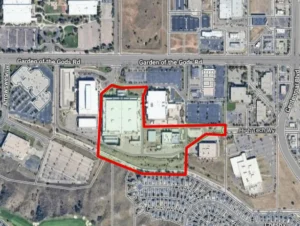
50MW Project Taurus Data Center Gets Go-Ahead in Colorado
A 50MW data center development known as Project Taurus has received planning approval in Colorado, advancing another significant compute facility into the state’s growing digital infrastructure pipeline. Colorado has attracted increasing data center investment in recent years, driven by its central US location, access to renewable energy sources, and relatively favourable permitting environment compared to more congested coastal markets.
The 50MW approval represents a meaningful mid-scale deployment — positioned between hyperscale campuses and enterprise edge facilities — that may be targeting colocation, AI inference, or hybrid cloud use cases. Colorado’s continued emergence as a data center destination reflects the ongoing geographic diversification of US compute infrastructure, as developers and tenants seek alternatives to saturated markets in Northern Virginia, Silicon Valley, and the Pacific Northwest.
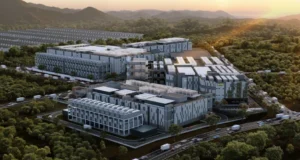
Singapore DC Developer Racks Central Secures $1 Billion from China-ASEAN Investment Fund
Singapore-based data center developer Racks Central has secured $1 billion in investment from the China-ASEAN Investment Fund, providing substantial capital to accelerate its expansion across Southeast Asia’s rapidly growing digital infrastructure markets. The raise positions Racks Central among the better-capitalised regional developers at a time when demand for data center capacity across ASEAN is being driven by cloud adoption, sovereign AI initiatives, and the proliferation of digital services across the region’s large, mobile-first population.
The China-ASEAN Investment Fund backing also signals continued cross-border capital flows into Southeast Asian digital infrastructure despite geopolitical headwinds, with investors viewing the region’s data center fundamentals — undersupplied capacity, strong GDP growth, and government digitalisation mandates — as a compelling long-term thesis. Racks Central’s expansion ambitions span multiple ASEAN markets beyond Singapore, where government-imposed capacity moratoriums have historically constrained new supply.
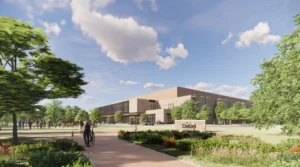
Data4 Confirms €5bn Plan for 700MW AI Data Center in Northern France
European data center developer Data4 has confirmed a €5 billion investment plan to develop a 700MW AI-optimised data center campus in northern France, in what would represent one of the largest single-site infrastructure commitments on the continent. The announcement aligns with France’s broader ambition to position itself as a leading European hub for AI compute, supported by government industrial policy and the country’s access to large-scale, low-carbon nuclear electricity — a key differentiator for power-hungry AI workloads.
Northern France’s proximity to major subsea cable landing stations and its grid connectivity to both the UK and continental European networks make it a strategically attractive location for hyperscale and AI-focused tenants. Data4’s confirmation of the 700MW plan signals strong forward demand visibility, likely underpinned by anchor tenant commitments from hyperscalers or frontier AI companies seeking dedicated, sovereign European compute capacity ahead of tightening AI regulatory requirements.
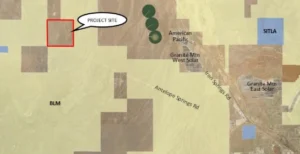
Proposal to Build 640-Acre Data Center in Iron County, Utah Gets the Go-Ahead
A proposal to develop a large-scale data center campus spanning 640 acres in Iron County, Utah has received regulatory approval, clearing the way for what could become one of the most expansive data center land footprints in the Intermountain West. Utah has steadily grown its data center industry over the past decade, offering competitive land and power costs, a stable seismic environment relative to other western states, and a favourable tax incentive framework targeting large capital investment projects.
The sheer scale of the Iron County site — 640 acres — suggests ambitions for a multi-phase hyperscale or AI campus development, potentially designed to accommodate hundreds of megawatts of IT load at full build-out. The approval reflects local government appetite to attract the economic development and employment associated with data center construction, even as some rural and exurban communities elsewhere in the US have pushed back against the power and water demands of large-scale digital infrastructure.
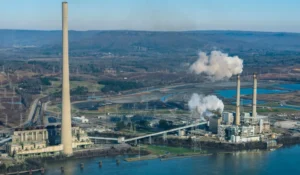
Google Commits $1.5 Billion to Alabama Data Centre Expansion
Google has committed $1.5 billion to expand its data center footprint in Alabama, marking a substantial deepening of the company’s investment in the American Southeast and reaffirming the region’s growing strategic importance in the broader US hyperscale geography. Alabama offers a compelling combination of low electricity costs, available land, and state-level incentive programmes that have increasingly attracted major technology infrastructure investment over recent years.
The investment is part of Google’s wider multi-billion dollar US data center expansion programme, which has accelerated significantly in response to AI-driven compute demand and the Biden and Trump administrations’ emphasis on domestic technology infrastructure. For Alabama, the commitment represents a significant economic development win, with data center projects of this scale typically generating hundreds of construction jobs and long-term operational employment, as well as substantial tax revenue contributions to host communities.